For farmers
What works here should not stay here.
GirSiko sits inside a farming community, not beside one. The genetics we select and the husbandry we practise are worth more spread across a district than kept behind one fence.
The idea
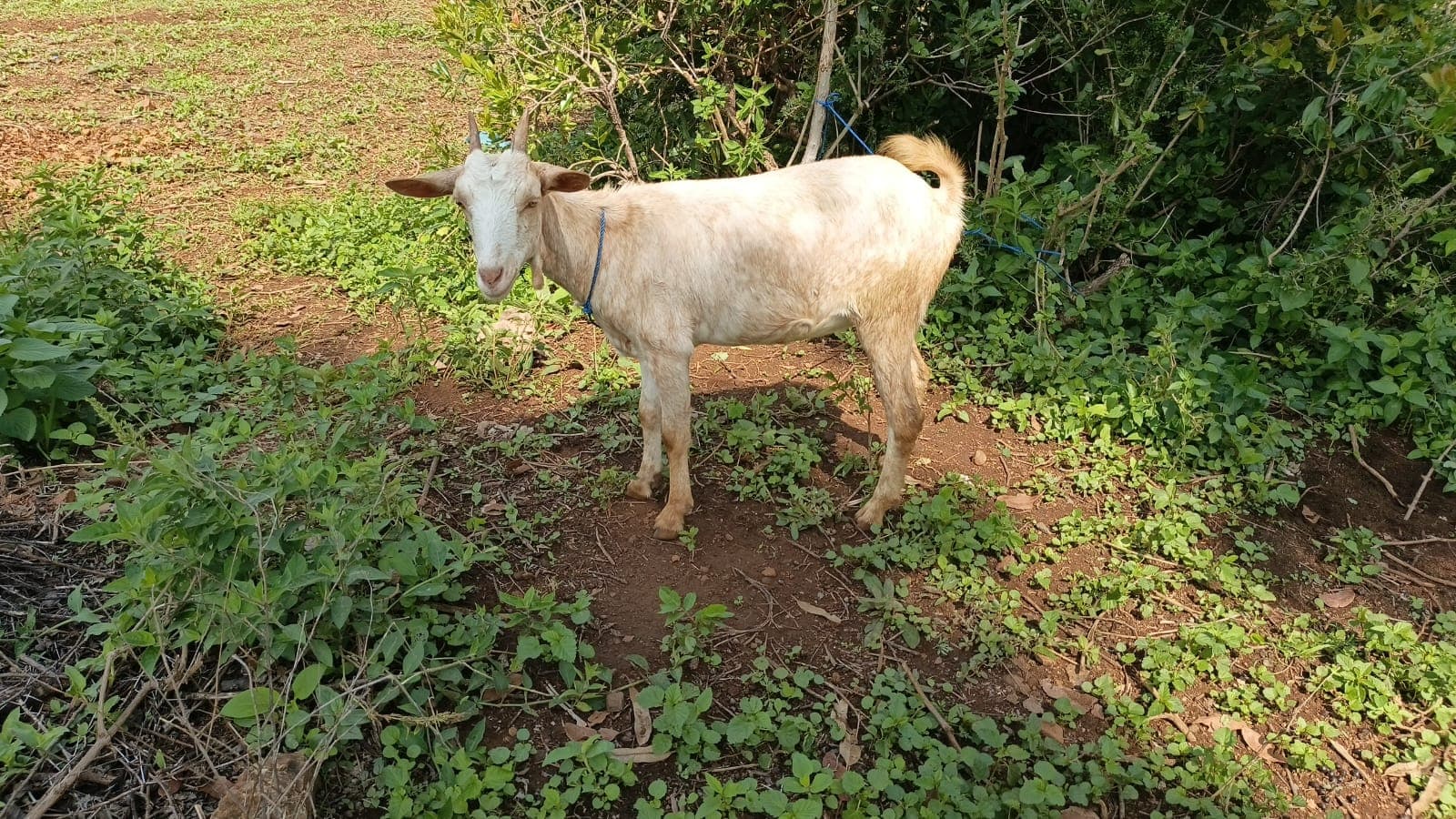
One good buck can change a lot of herds.
Most goats in Rachuonyo North are kept by households with a handful of animals — held as savings, bred by whichever buck is nearby, sold on appearance when cash is needed. Three things change that, and none of them asks a farmer to start again.
- 01
Better genetics
Through a sire a single household could never justify keeping on its own.
- 02
Better husbandry
Housing, feeding and routine health cost attention far more than money.
- 03
Someone who pays for it
A better animal has to be worth more at the gate, or the first two do not pay.
A commercial farm can supply all three, because it already needs them itself.
Available now
What a farmer can arrange today.
These are live services. Message or call the farm and we will work out the timing with you.
Buck service
Open nowBring a doe to a selected Galla or Galla-cross sire — the fastest way to lift a herd's genetics without keeping a breeding buck year-round.
Improved genetics
Open nowGalla and Galla-cross bloodlines developed here, with the lineage, weight and health history behind them. A known animal rather than a guess.
Practical training
Open nowHousing, feeding, routine health, breeding and simple record-keeping, arranged directly with the farm for individuals or groups.
Open farm days
Open nowWalk the farm, look at the housing and the herd, and ask what you would ask a neighbour. There is no charge.
Young people
Agriculture has to be a business a young person would choose.
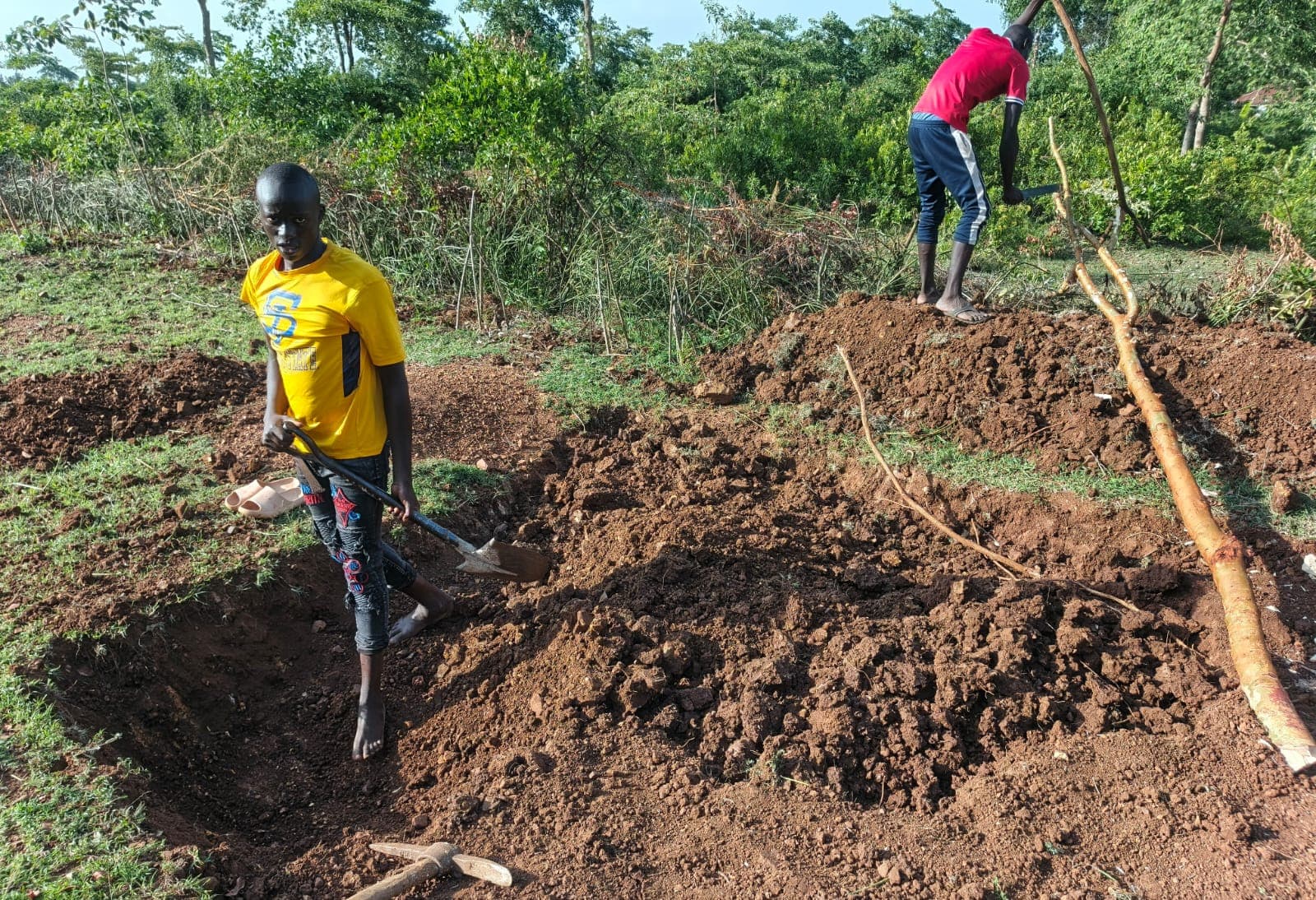
The farm is run day to day by a small local team, with women in senior operating roles. The work — animal care, construction, digging the water pan — is hired from the surrounding community.
Work on the farm
Animal care, daily operations and construction are done by people from the area, including the young people digging the water pan by hand.
Practical skills
Training in housing, feeding, routine health, breeding and record-keeping is available to farmers and young people, arranged directly with the farm.
A herd of your own
Buck service and breeding stock from the farm let a young farmer start and improve a herd of their own, not only find a job on someone else's.
Beyond the gate
Value that does not stop at the farm boundary
A livestock business earns its place in a rural economy through the work it creates, the animals it improves and the knowledge it passes on — so those are the things we measure.
Livelihoods
Paid work on the farm, income for local suppliers, and a route into livestock enterprise for farmers who take on improved genetics.
Livestock
Better genetics, better animal health and better growth rates — on our herd, and through buck service on the herds around us.
Climate resilience
Water storage, browse management and drought-tolerant genetics, so production holds up through a difficult season.
Skills
Practical livestock and agribusiness knowledge, built by running the farm and passed on through training, buck service and farm visits.
Local economy
Wages, purchasing and services that stay in Rachuonyo North, plus a local supply of quality animals that used to be sourced from far away.
Environment
Manure composted back into soil, and browse rested rather than stripped, so the land keeps feeding the herd.
Today
What exists now
This is the farm as it operates — what a visitor would find if they walked onto the site this week.
A working commercial herd
Goats bred and raised in Rachuonyo North, individually tagged, weighed and health-recorded, and managed as a commercial herd.
Work for a local team
The farm is staffed from the surrounding community, with women in senior operating roles, and buys labour, feed and construction locally.
Improved genetics in the district
Galla and Galla-cross sires kept on the farm are available to neighbouring goat keepers through buck service, without them having to keep a buck year-round.
Climate-smart infrastructure
A raised goat house in use, paddock fencing, water storage and troughs, and a water pan under hand excavation.
An open farm
Farmers, young people, students and groups can visit and see the housing, the herd, the records and the water work at no cost.
Manure returned to soil
Manure is collected from the raised floor and composted for use as an organic soil input rather than lost as runoff.
How we measure it
The same records that run the farm produce the numbers: the herd register and individual animal records, the sales register, the employment register, and the training attendance register. Nothing here is estimated from a formula.
Herd numbers, sales and employment change through the year, so we report them in dated updates rather than as permanent claims on this page. If you want the current position, ask us — or come and count the animals yourself.
Work with us
Farmers, groups and organisations
If you keep goats nearby, run a farmer group, or work on livestock and rural enterprise in Homa Bay, we would like to hear from you.