Nichodemus Amollo
Founder & Chief Executive
Sets company direction and owns finance, systems and partnerships. He founded GirSiko in his home area of Rachuonyo North.
Our story
GirSiko started with a small herd of goats in Rachuonyo North and a straightforward question: what would it take to make livestock a business here, rather than a store of value sold off when something goes wrong?
“Kazi iendelee” — the work continues
Where it started
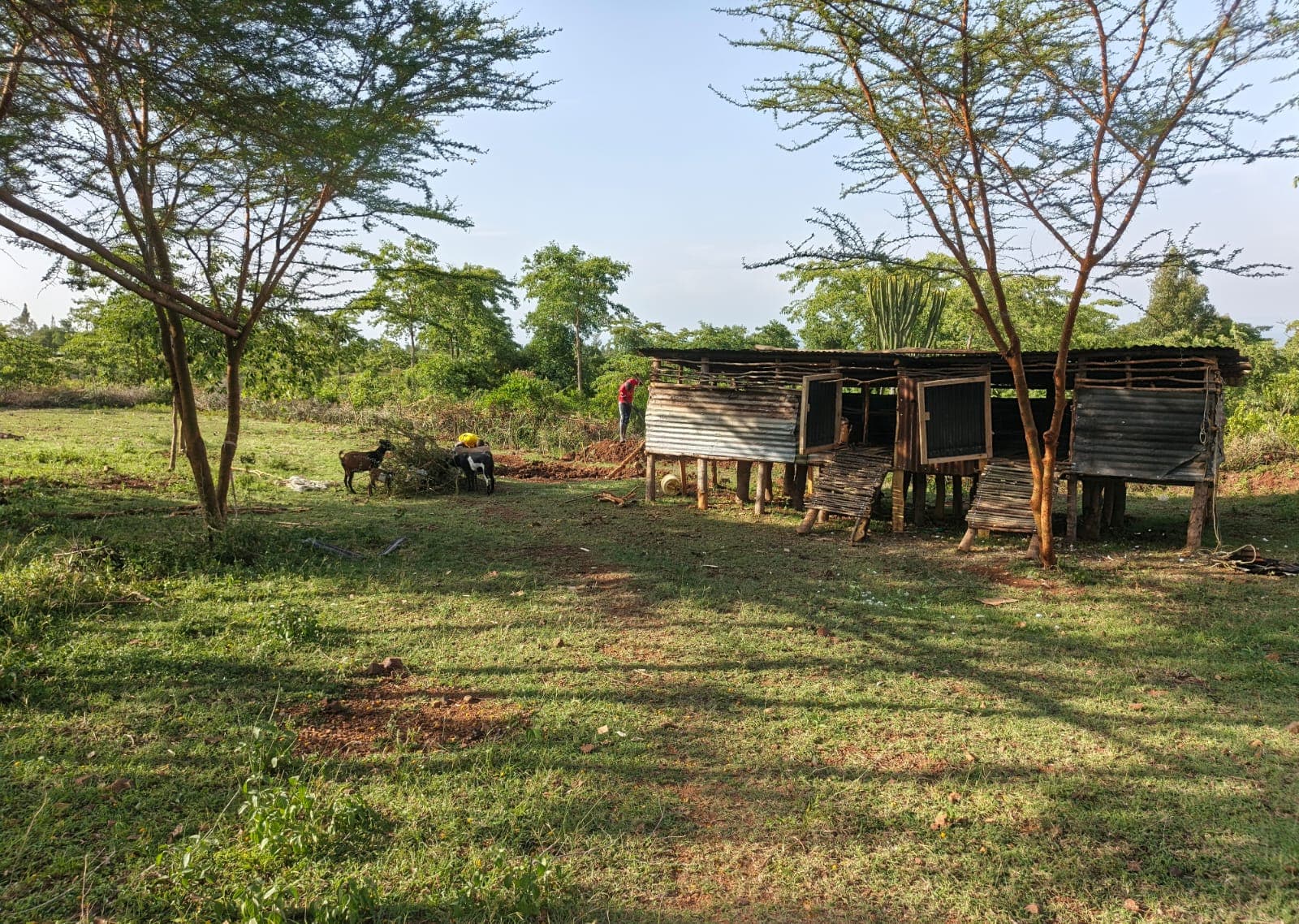
The founder grew up in Rachuonyo North, where almost every household keeps livestock of some kind. Goats are everywhere and rarely managed as a business: bought and sold on appearance, bred more or less by chance, treated when something goes wrong rather than before it does.
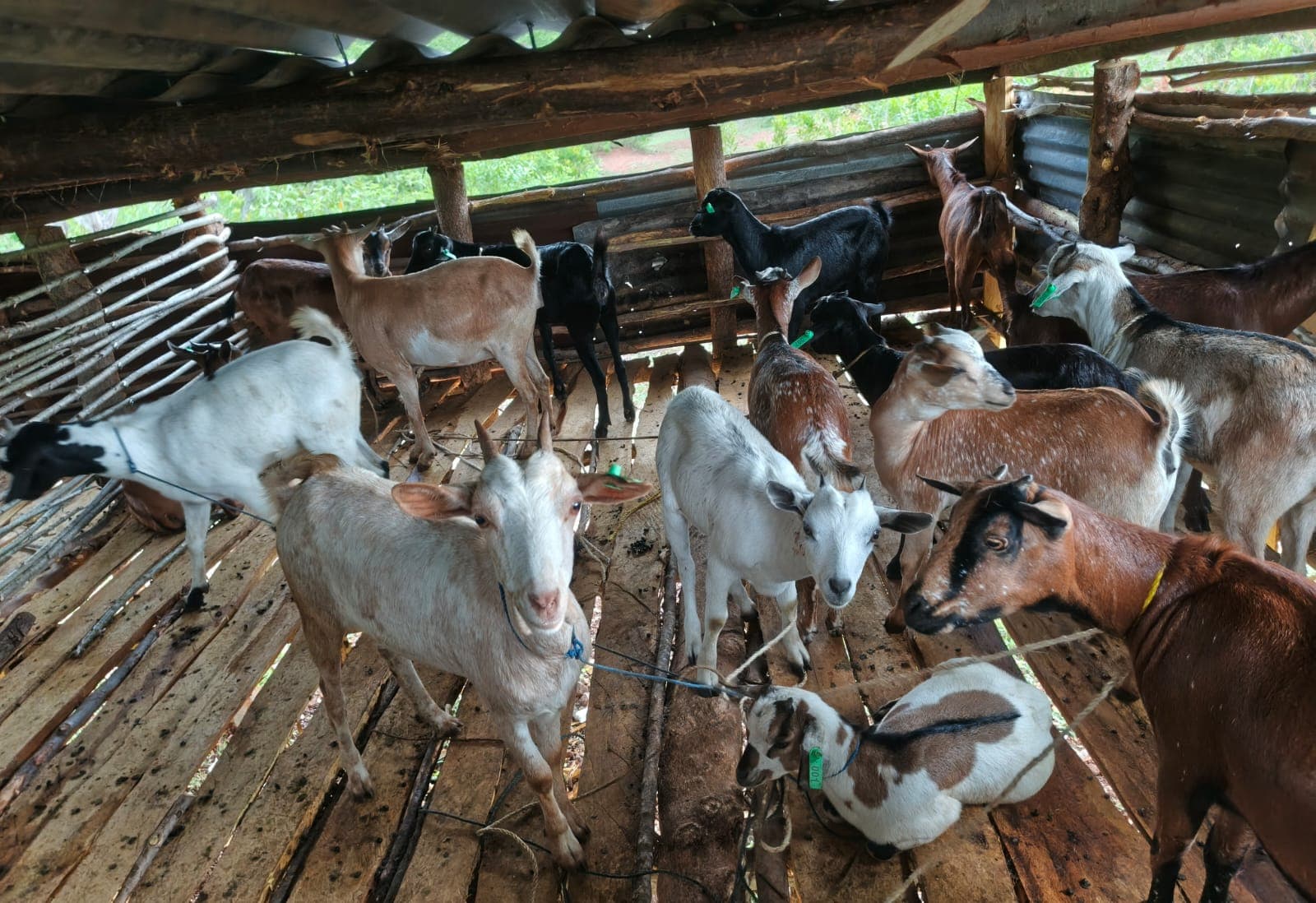
GirSiko began as a small founder-funded herd, built up animal by animal from reinvested income. In January 2026 the company was incorporated, a raised goat house was completed, and the herd was tagged so every animal could be tracked individually. The business grew out of the farming, not the other way round.
Why Homa Bay
This is home, and it is a deliberate choice of location rather than a convenient one.
Rachuonyo North sits on the shore side of the Lake Victoria escarpment: water-stressed, semi-arid, with long dry seasons and rainfall harder to predict than it used to be.
Farming here means every decision is made under the same conditions our neighbours face. Nothing is adopted on this farm until it has survived a dry season on this land — which is exactly what makes it worth passing on.
Why goats
Goats fit smallholder systems better than anything else available here, and they improve quickly under selection.
Goats feed on leaves, shrubs and other browse as well as grass. That wider feed choice is valuable when pasture thins during a dry period.
Goats need less space and water than cattle, which makes them practical for smallholders and for farms where water has to be managed carefully.
Galla goats are associated with Kenya's arid and semi-arid areas. We use Galla and Galla-cross sires to improve frame, growth and suitability for local conditions.
What we saw
One farm cannot close these for a district. A farm that closes them for itself, keeps the evidence and sells the genetics and knowledge outward can go a long way further than its own fence line.
Improved breeding animals are scarce locally and expensive to bring in from far away, so most herds improve slowly or not at all.
The nearest reliable source is about ten kilometres away. How much water a farm can store decides how many animals it can carry.
There is very little local guidance on managing a herd for productivity rather than survival — housing, feeding, routine health, selection.
Mission
To make livestock farming a more productive, resilient and inclusive pathway to rural prosperity in Kenya.
Vision
A thriving rural economy where livestock creates opportunity, resilience and prosperity for generations.
A commercially viable farm first. Everything else is built on it.
The journey
Early 2025
A small founding herd is established in Rachuonyo North, funded by the founder.
January 2026
GirSiko Integrated Farms Ltd is incorporated in Kenya under registration number PVT-OD1KMJ2D.
2026
A raised slatted-floor goat house is completed and brought into use.
2026
The herd is tagged, and weight, health and lineage records become part of daily management.
2026
Hand excavation begins on an on-farm water pan to build dry-season water storage.
September 2026
Herd records move into GirSiko HerdBook, the farm's own software, and the herd registry goes public on this site.
The team
Each role below names the decisions and the work that person owns.
Founder & Chief Executive
Sets company direction and owns finance, systems and partnerships. He founded GirSiko in his home area of Rachuonyo North.
Co-Founder & Market Development
Builds the market side of the business: buyers, pricing and the relationships that take farm output to customers.
Operations Manager
Runs the farm day to day — animal checks, breeding records, feeding, staff supervision and the work on site.
How the model works
To make livestock farming a more productive, resilient and inclusive pathway to rural prosperity in Kenya. The route there runs through a farm that works commercially first, and carries what it learns outward from there.
Build a livestock business that works
Good genetics, disciplined animal health and clear farm data, run commercially.
Put what works within reach of other farmers
Breeding services, improved stock and practical knowledge, shared with our neighbours.
Work for young people from this community
The farm is staffed locally, and young people from the surrounding area are digging its water pan.
The order matters. A farm that cannot pay for itself has nothing durable to offer anyone else — its advice is untested and its stock is not worth buying. A farm that works commercially has both: animals other farmers want, and management practice that has already survived a dry season on this land.
So the farm comes first, and everything else is built on top of it. Improved genetics reach surrounding herds through buck service and the animals that leave here for other farms. Knowledge moves through training and farm visits. Market understanding comes from working in the same trade our neighbours are in. And as the enterprise grows, so does the work it can offer the people around it.
What we build on
Six levers decide whether a livestock enterprise in this environment is productive or merely present.
Selection, breeding, feeding and animal health aimed at animals that grow well and stay productive in this environment.
Breeds, water storage, browse management and feed planning chosen so the farm can keep producing through a difficult season.
Practical knowledge generated by running the farm, then shared with farmers in the form they can use on their own land.
Production planned against real demand, with pricing based on weight and condition rather than a guess at the gate.
Work, skills and enterprise opportunities created as the business grows, hired from the community the farm sits in.
Records, weights and digital tools used to improve breeding, animal health and the economics of the herd.
How we work
Breeding, housing, browse and water decisions answer to the conditions on this farm, not to a generic production model.
Weight, health and breeding data decide which animals stay in the herd and which matings are repeated. The farm is run on what the records show.
Genetics, husbandry and practical knowledge are more valuable spread across a district than held on one farm.
This site describes what the farm does today and the work under way on it — never a plan dressed up as a service.
Governance
Company direction, market development and daily farm operations each have a named owner, so decisions and enquiries reach the right person.
Animal, health, breeding and cash records are kept as working management tools, used weekly rather than assembled on request.
GirSiko is incorporated in Kenya as GirSiko Integrated Farms Ltd, registration number PVT-OD1KMJ2D.
Livestock movement permits are obtained from the County Veterinary Office for animals leaving the farm, as required for each transaction.
Come and see
Photographs and paragraphs only go so far. Farmers, young people, students and groups are welcome, free of charge.