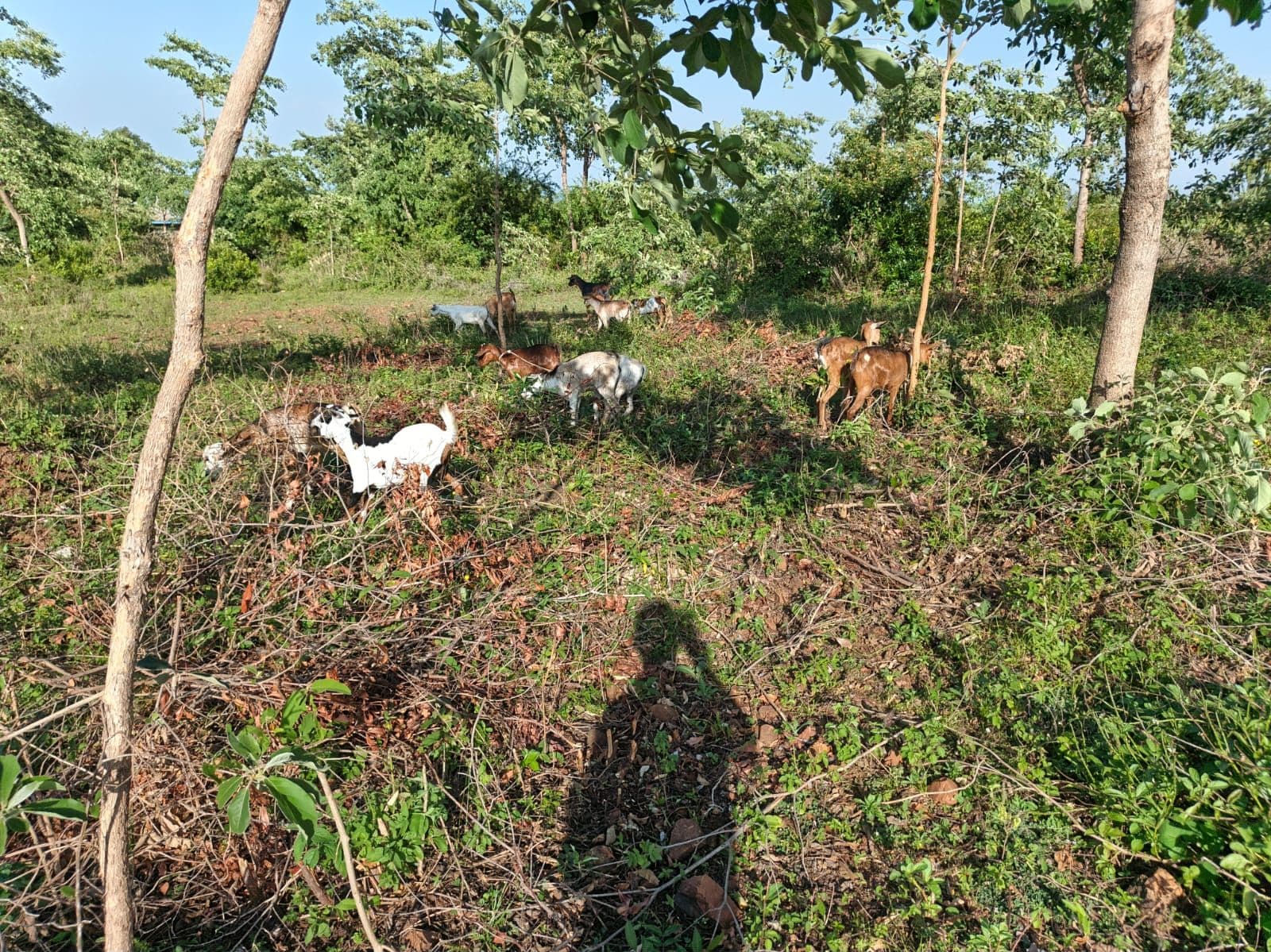
By late August 2026, the farm had recorded about five months without meaningful rain. This is a dated account of that period, not a description of the weather whenever this page is read.
Browse thinned as the dry period continued, stored water had to be watched closely, and the water-pan work became more important. Daily checks focused on body condition, appetite, movement, and any animal beginning to separate from the herd.
The conditions also showed why GirSiko keeps goats and uses Galla and Galla-cross sires. Goats can use leaves, shrubs, and other browse as well as grass, while the breeding programme selects animals that perform under local conditions. Genetics do not remove the need for water or feed, but they are one part of managing risk.
Rainfall changes through the year. The durable lesson from this period is that herd size, browse, and water must be managed together before the next extended dry period arrives.