Skip to content

Gallery

The farm, as it is.

Every photograph here was taken on the farm in Rachuonyo North. Nothing is staged and nothing is stock. Filter by what you want to look at.

12 photographs
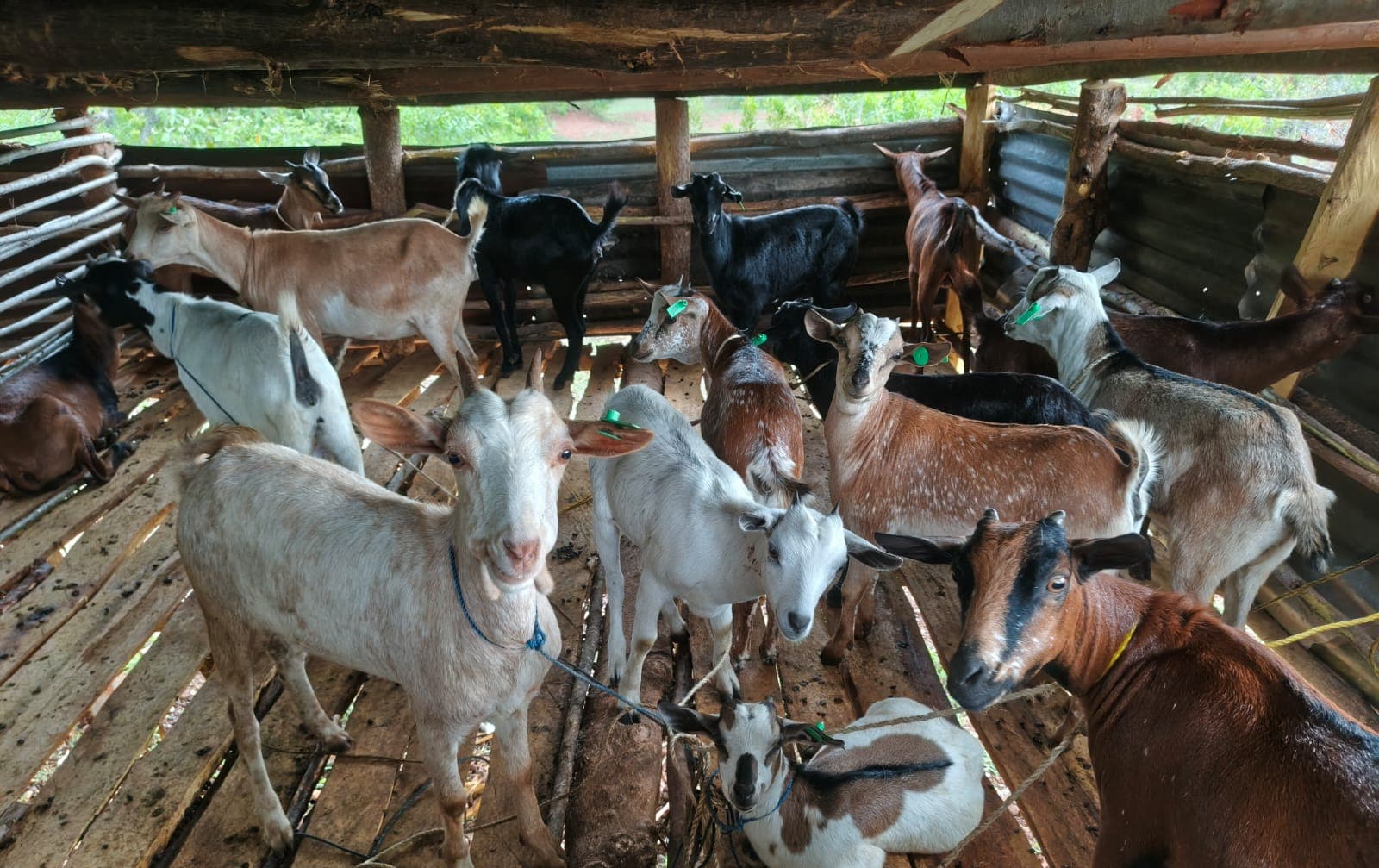
  • Around fifteen goats standing on the raised slatted timber floor of the GirSiko goat house. Several wear numbered green ear tags. A cream-white doe on a blue tether looks directly at the camera.
    HerdThe breeding herd in the goat house at Rachuonyo North.
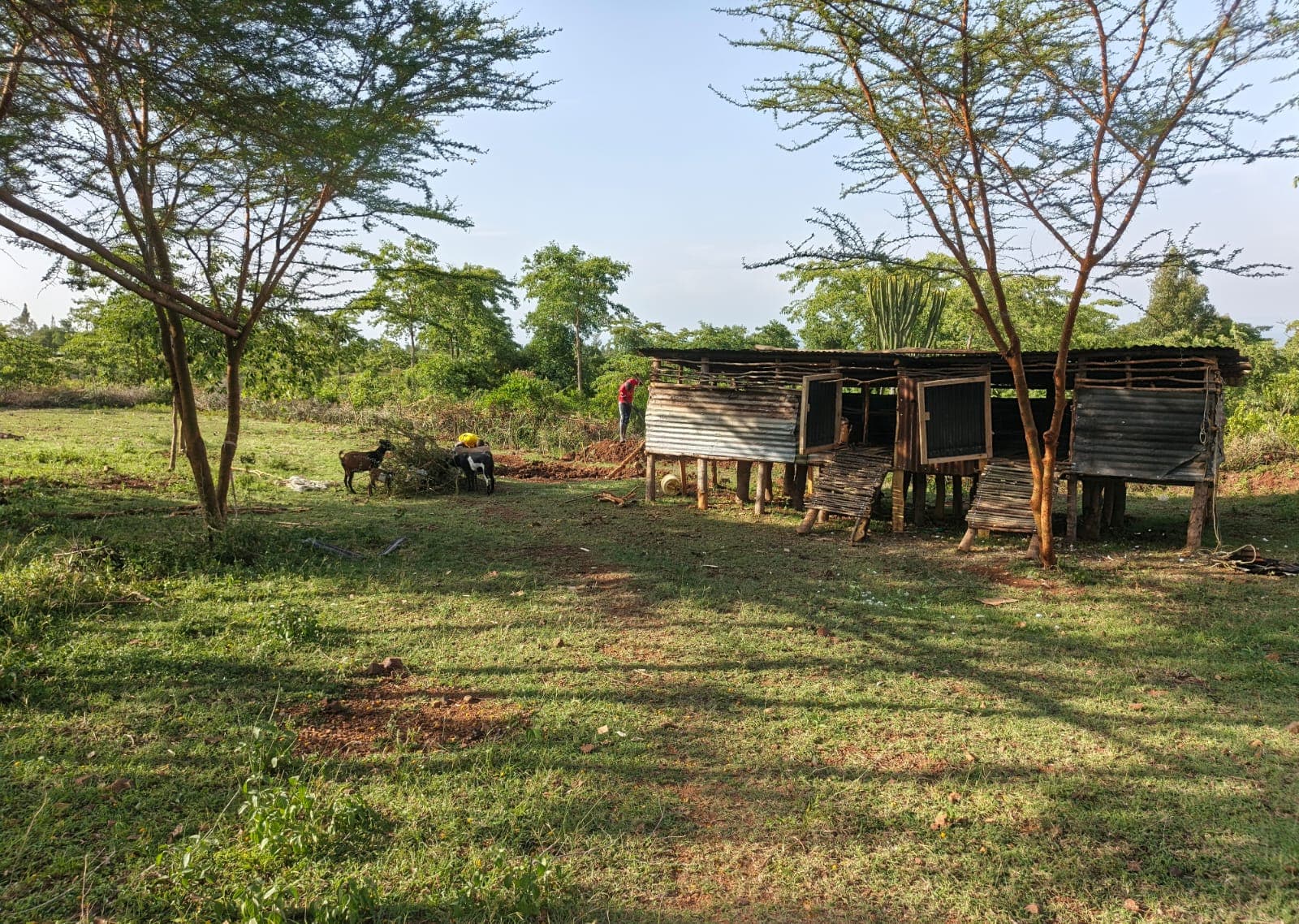
  • The GirSiko goat house raised on timber stilts with iron-sheet walls and timber access ramps, standing under acacia trees on open grass. Two goats graze to the left and two people are working on the ground behind the house.
    HousingThe goat house and the ground around it, Rachuonyo North.
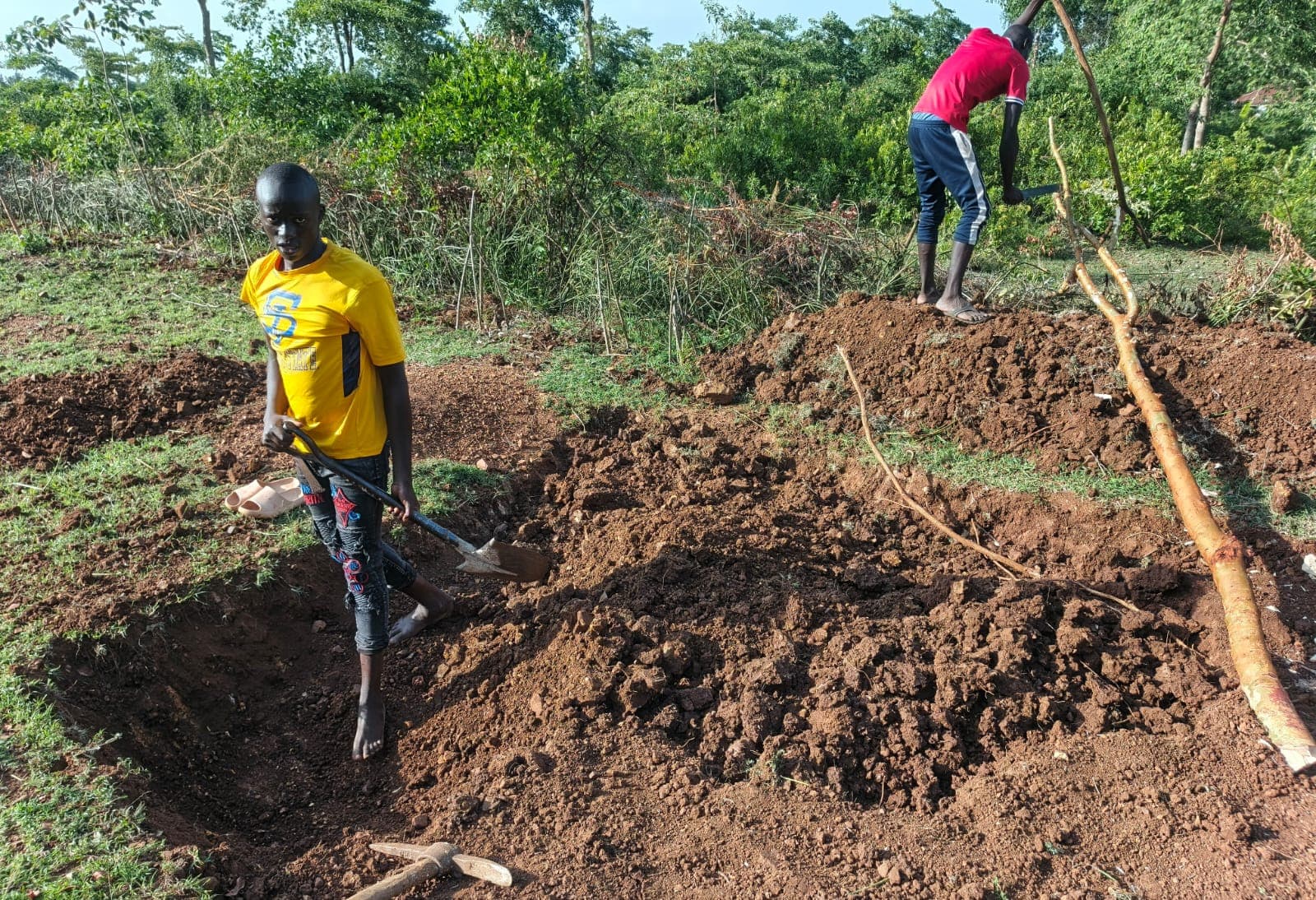
  • Two young men hand-excavating the GirSiko water pan. One in a yellow shirt stands in the cut holding a spade and looks at the camera; the other, in a red shirt, works on the mound of red soil behind him. Cut brush and green trees surround the site.
    WaterThe water pan is being dug by hand, by young people from the surrounding community.
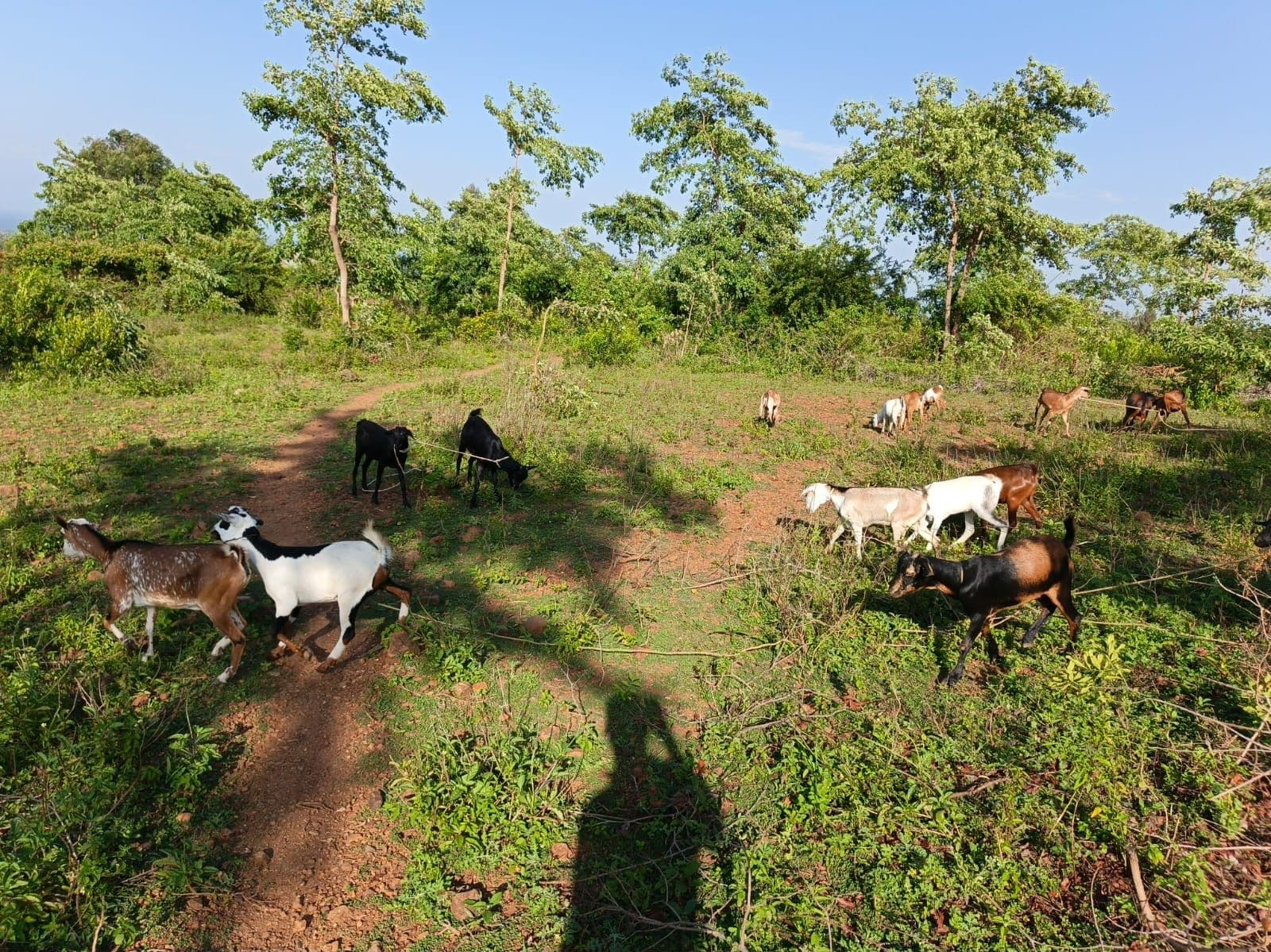
  • About a dozen goats spread across open ground on the GirSiko farm, some on a red footpath and others in low green scrub, with tall trees behind them and Lake Victoria faint on the horizon.
    BrowseThe herd out on the browse under supervision.
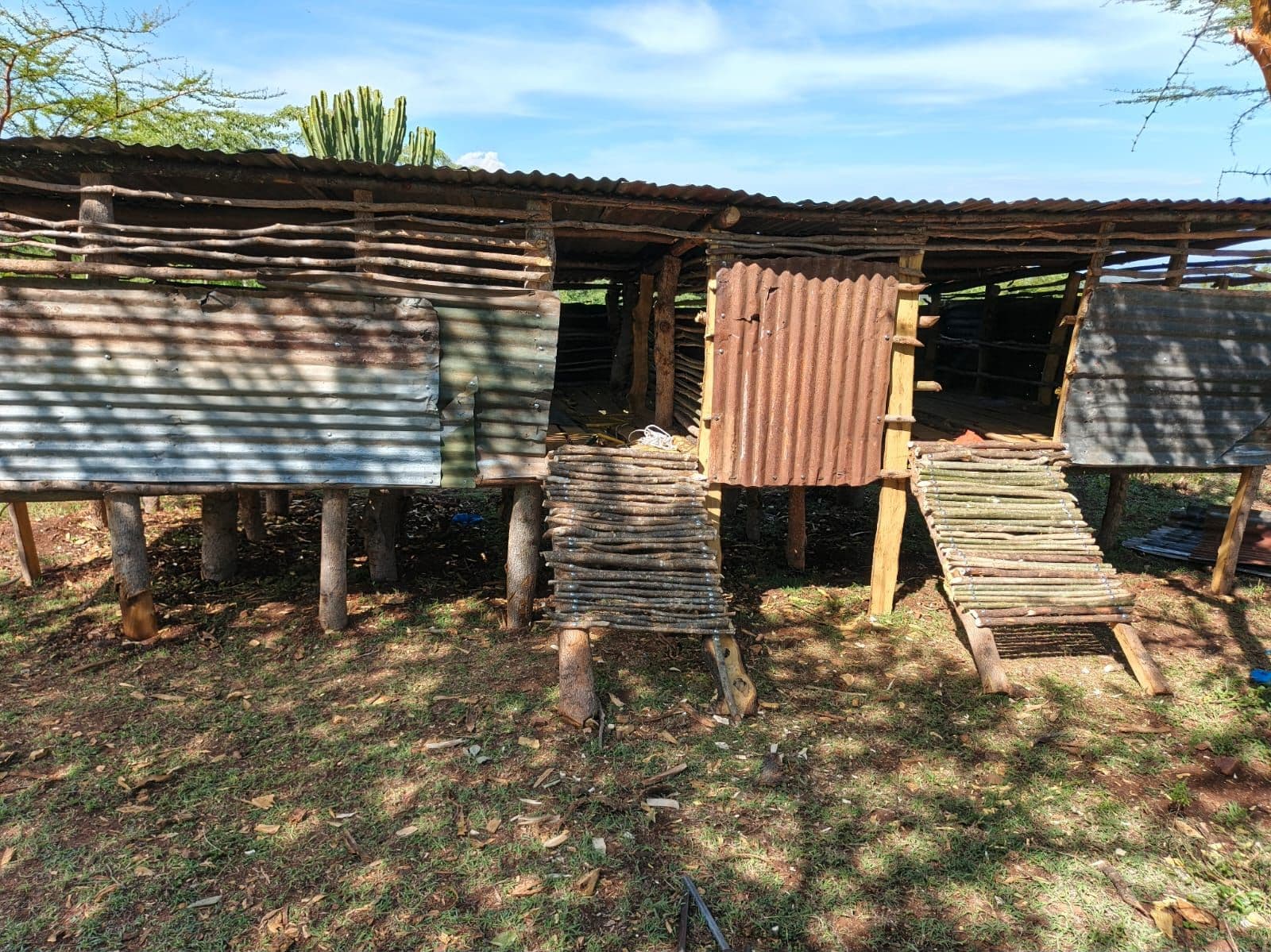
  • The goat house seen from outside in full sun: a long timber-framed structure on stilts, walled with corrugated iron sheets of different ages, with two ladder-like timber ramps leading up to the entrances.
    HousingRamps up to the raised floor. Manure collects underneath, where it can be gathered.
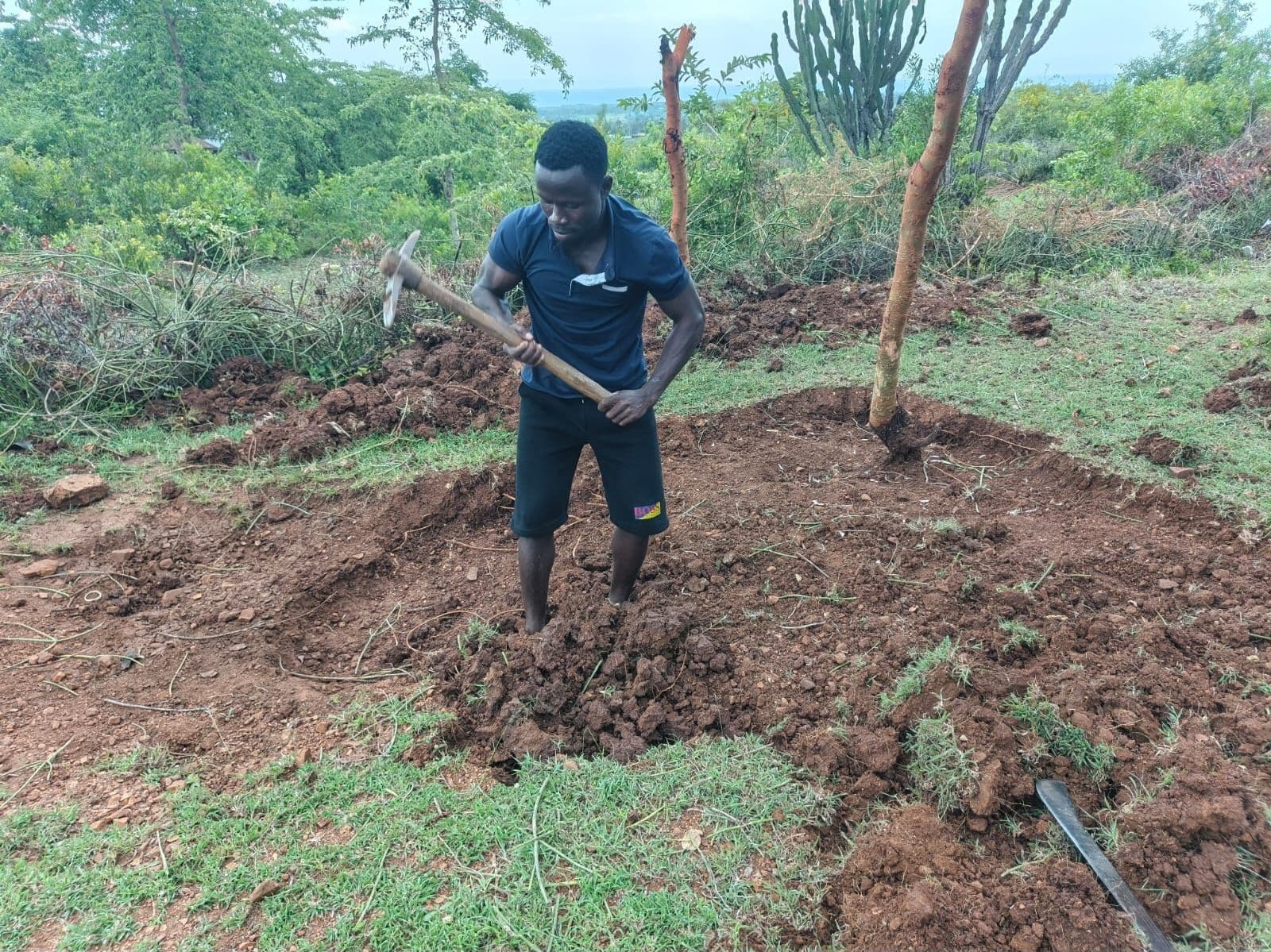
  • A young man in a navy polo shirt swinging a mattock to break red soil while hand-excavating the GirSiko water pan. Candelabra euphorbia and cut brush ring the site, and Lake Victoria is visible on the horizon.
    WaterWater pan excavation began by hand in 2026 — the priority build on the farm.
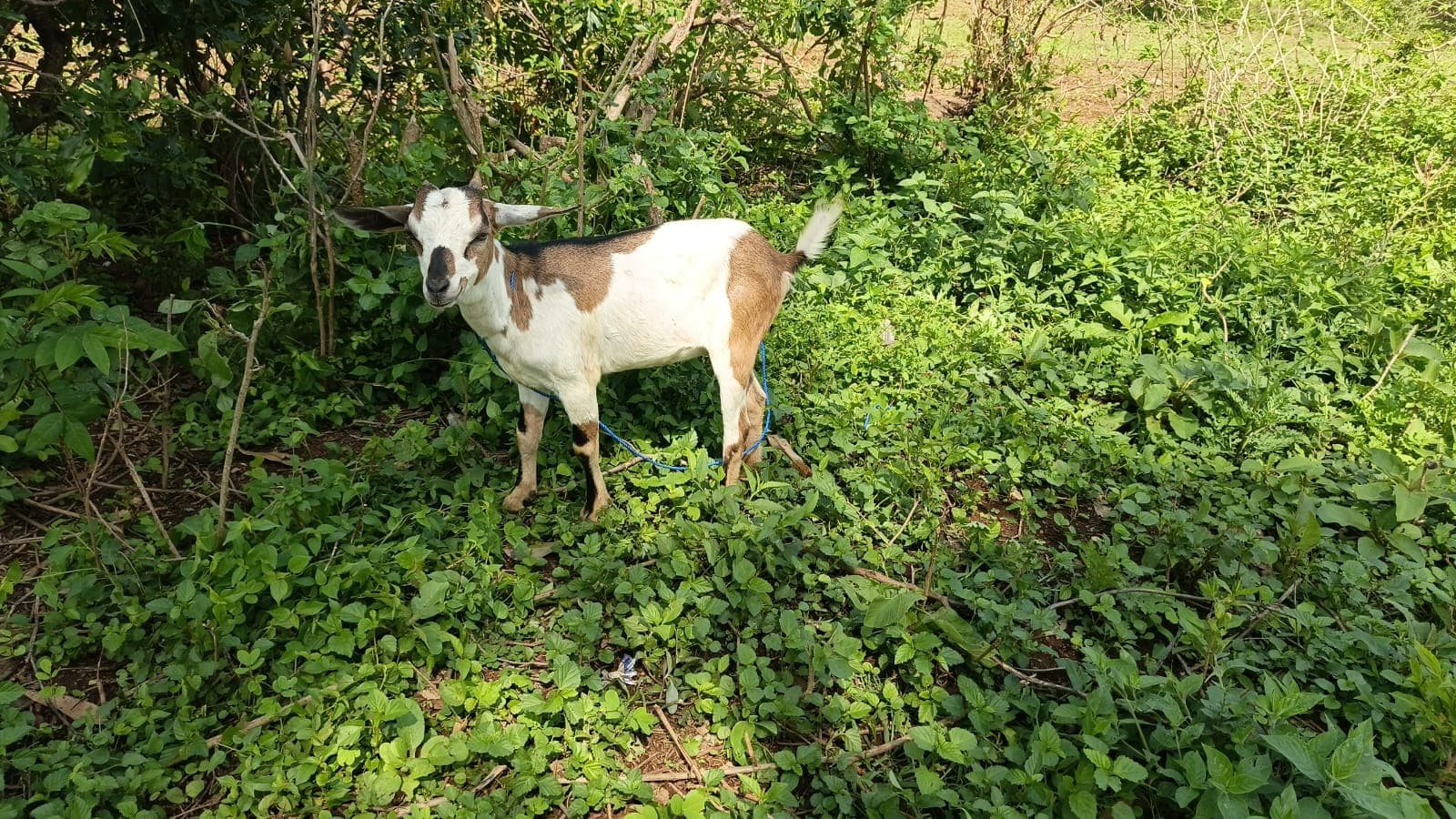
  • A white and brown doe with a blue tether standing in thick green undergrowth at the edge of the farm, looking towards the camera with shrubs and saplings behind her.
    BrowseBrowse, not just grass — goats do best on mixed shrub and leaf.
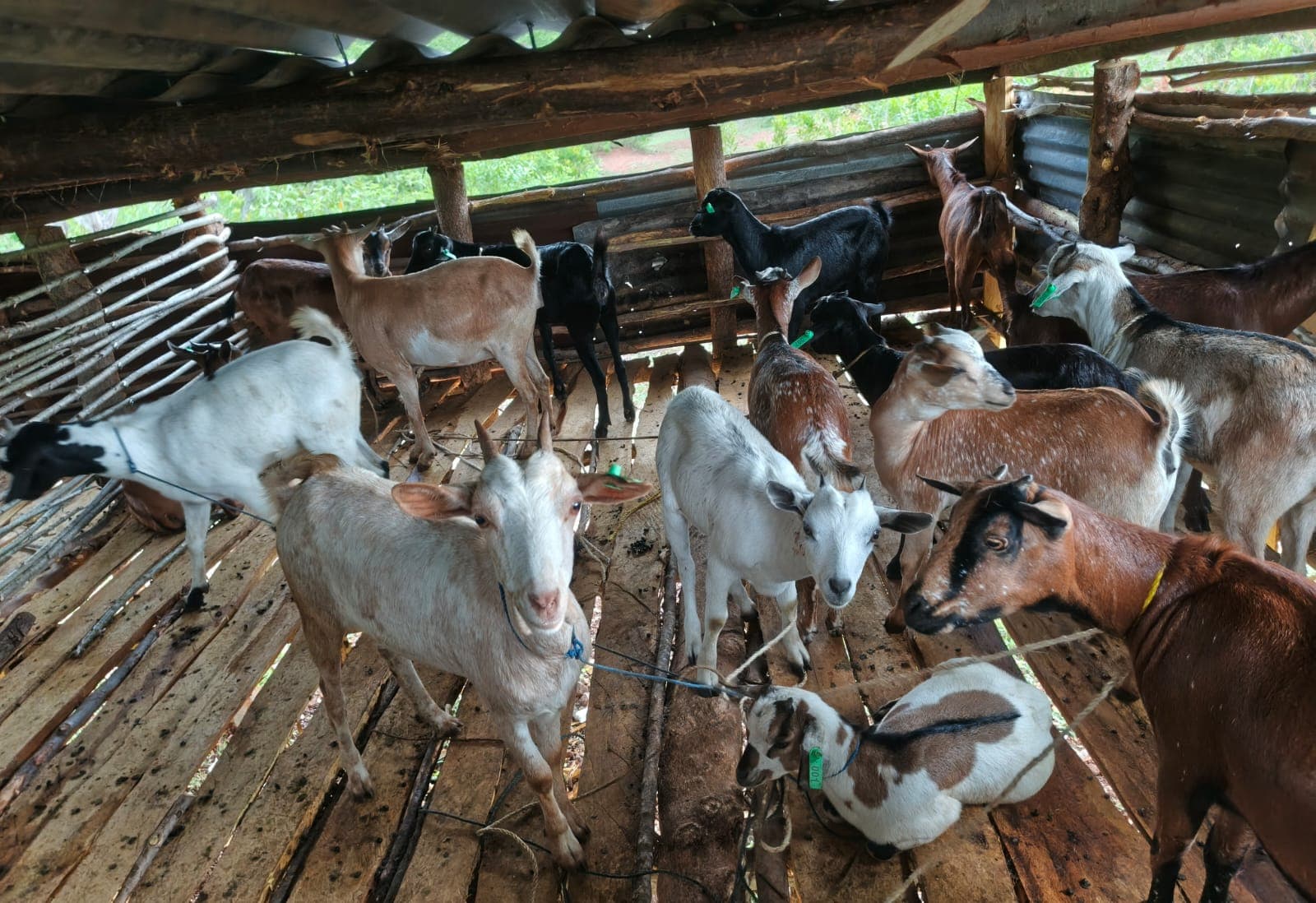
  • The herd inside the goat house from a lower angle, showing the split-timber floor, the woven stick wall and the iron-sheet roof. Several goats wear green ear tags; one lies down in the foreground.
    HerdMorning in the house, before the herd moves out to browse.
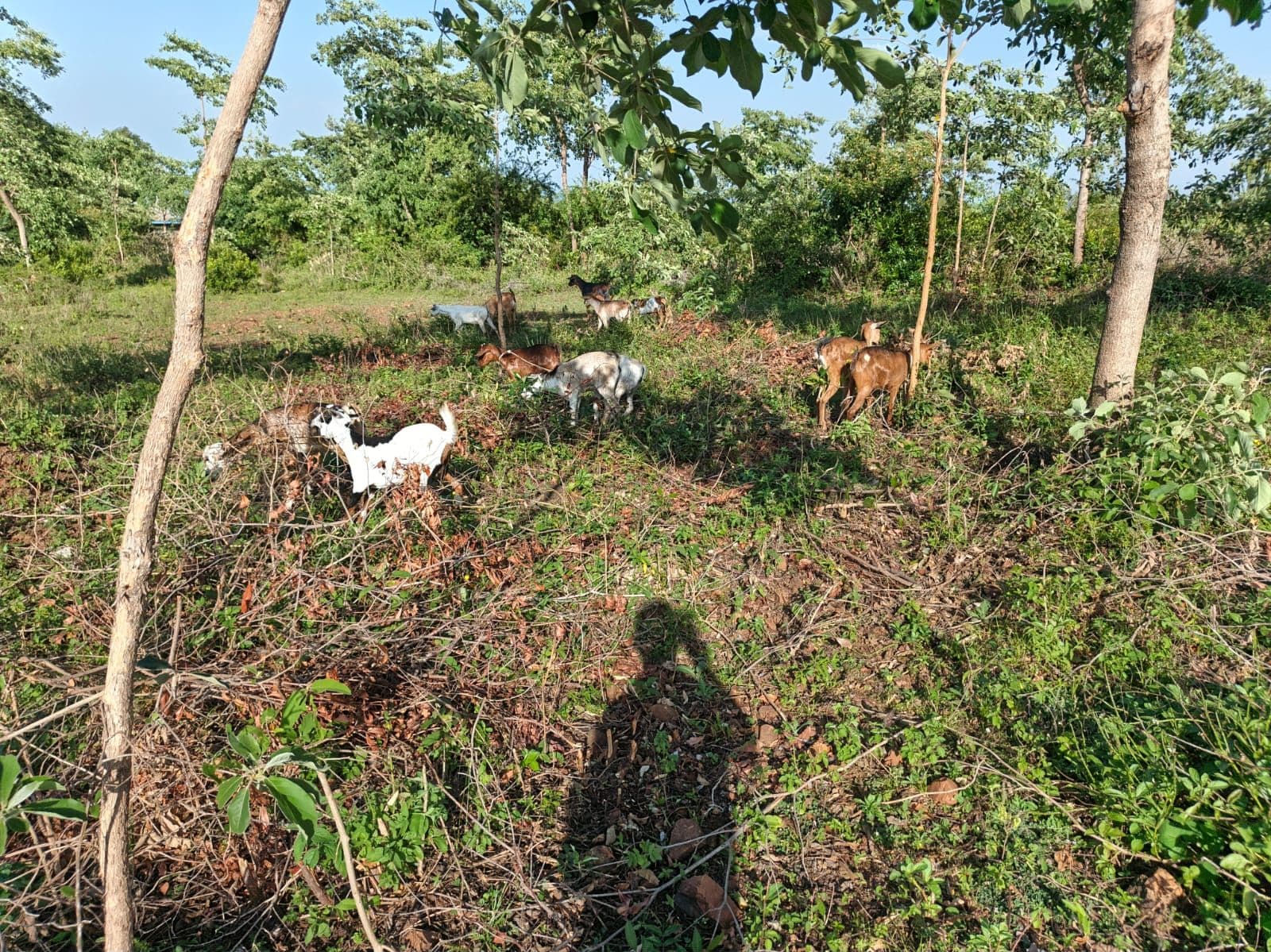
  • Goats feeding on cut brush among trees at the edge of the GirSiko farm, several with their heads down in the leaves and others moving through the green undergrowth.
    BrowseCut browse put within reach of the herd.
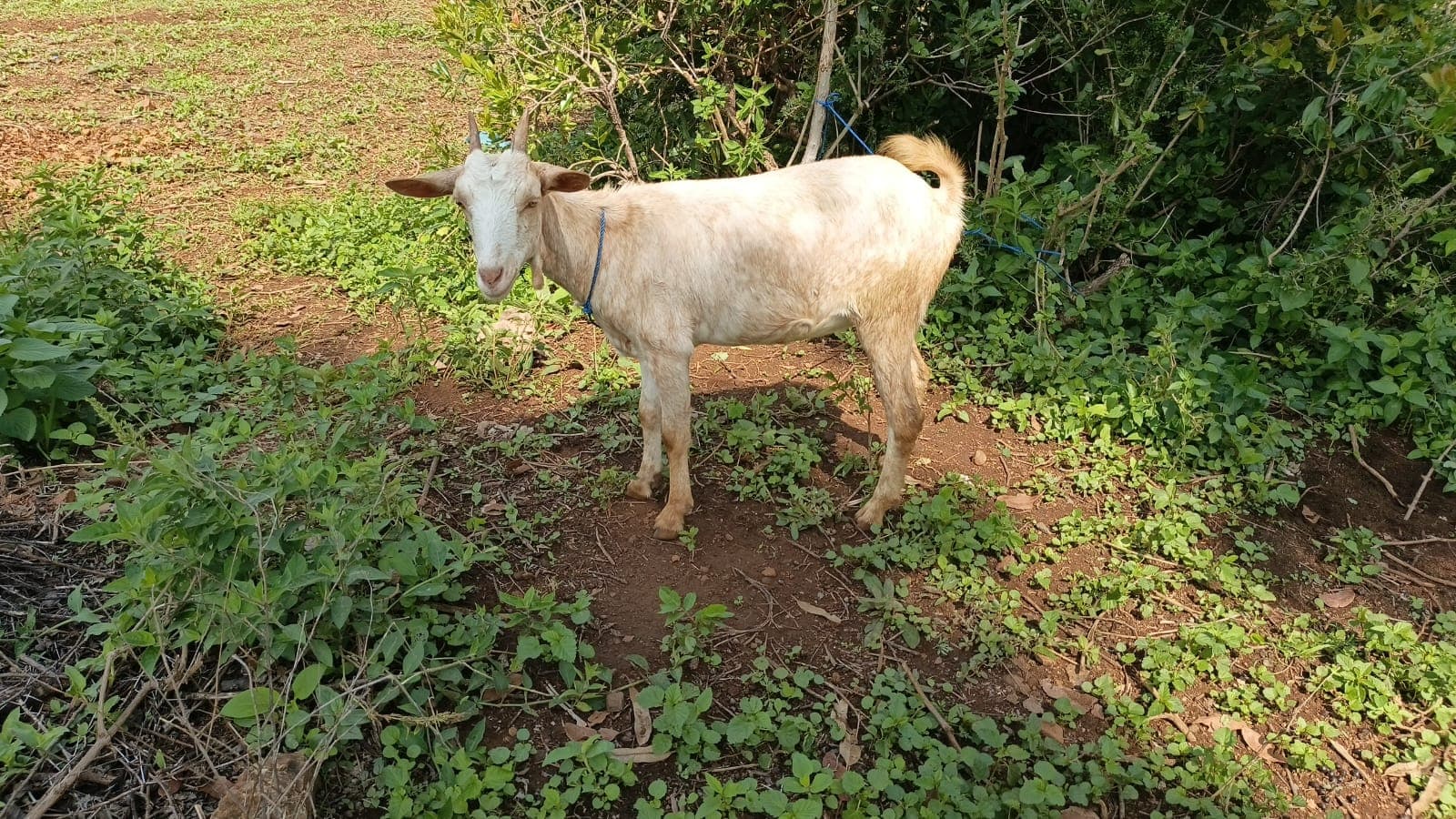
  • A cream-white doe with a pale ear tag and a blue neck tether standing on bare red soil beside dense green bush at the GirSiko farm.
    HerdA doe from the breeding herd.
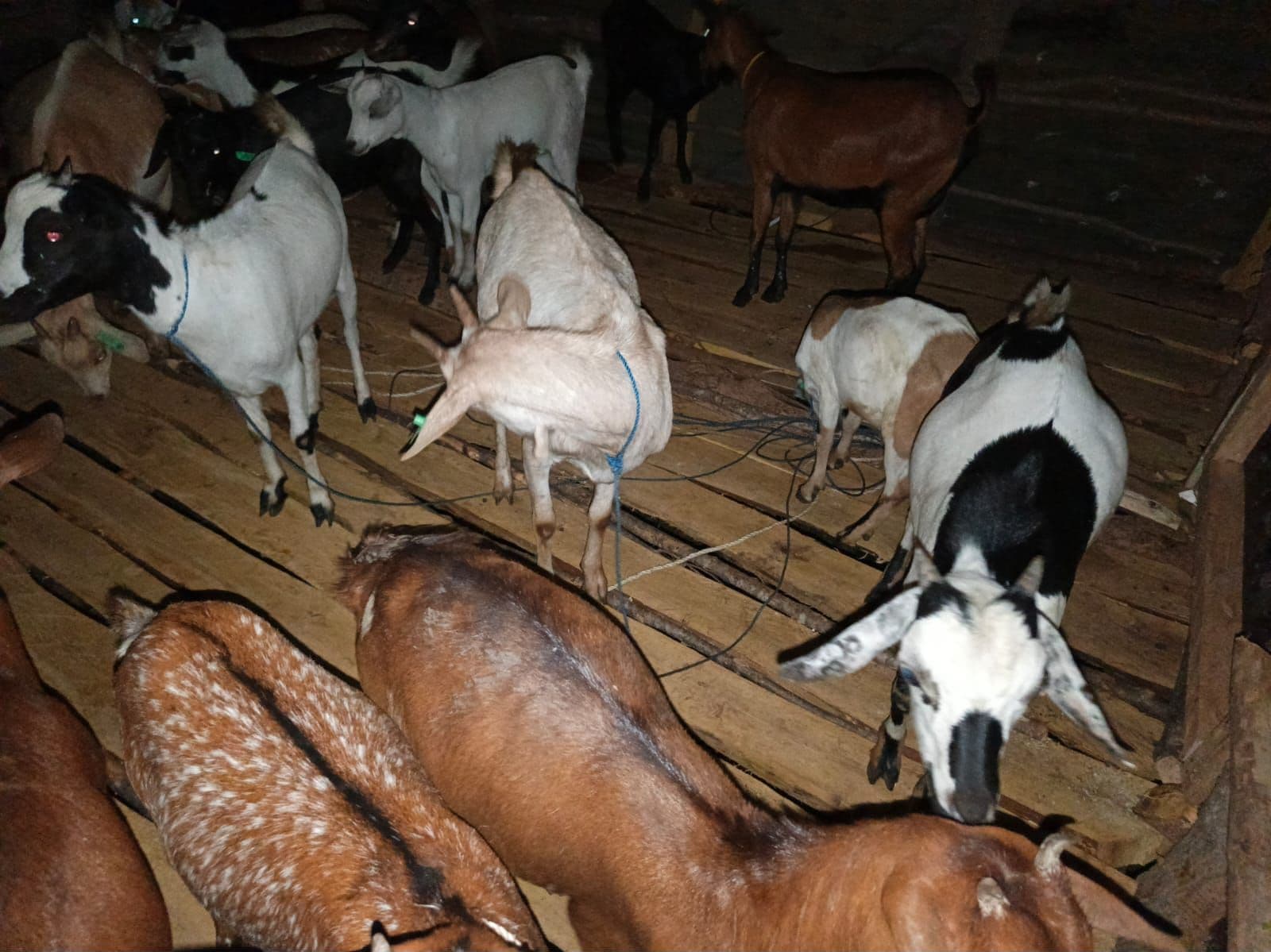
  • The herd housed at night on the slatted timber floor, lit by a single light. Goats stand and lie tethered on the boards, some wearing green ear tags.
    HousingThe herd is counted, checked and secured in the house each evening.
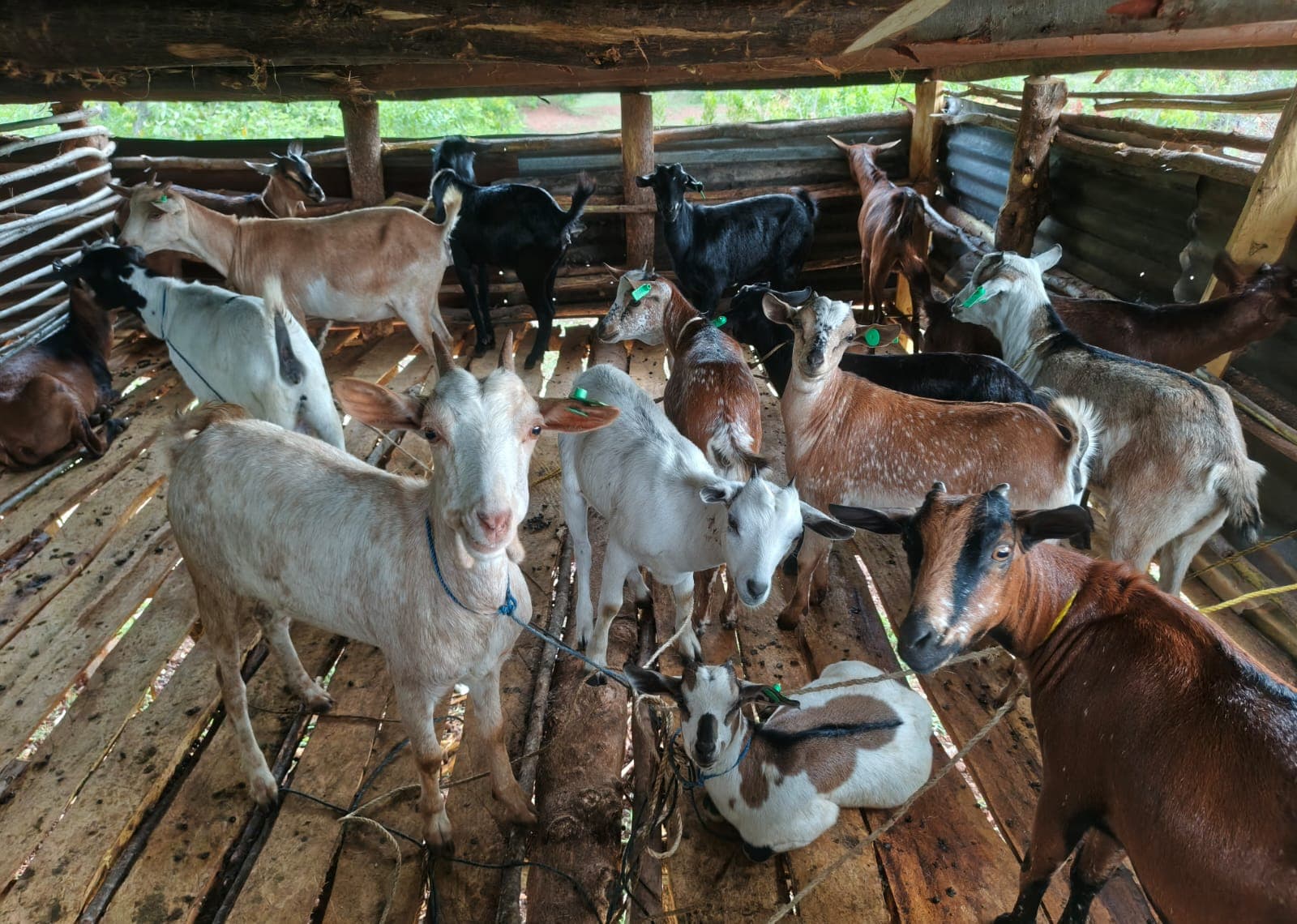
  • Wider view of the same group of goats on the slatted floor of the goat house, with the timber frame, iron-sheet walls and green bush beyond the open sides.
    HerdInside the 22 × 12 ft house. The raised floor keeps the herd off wet ground.

Better in person

Photographs only go so far

The farm is open to farmers, young people, students and groups, free of charge. Come and see the herd, the housing and the water work for yourself.