
Visit the farm
Come and see it for yourself.
The farm is open to farmers, young people, students, groups and anyone working on livestock in this part of Kenya. There is no fee and no formal tour — get in touch first so we know you are coming and can have someone free to walk you round.
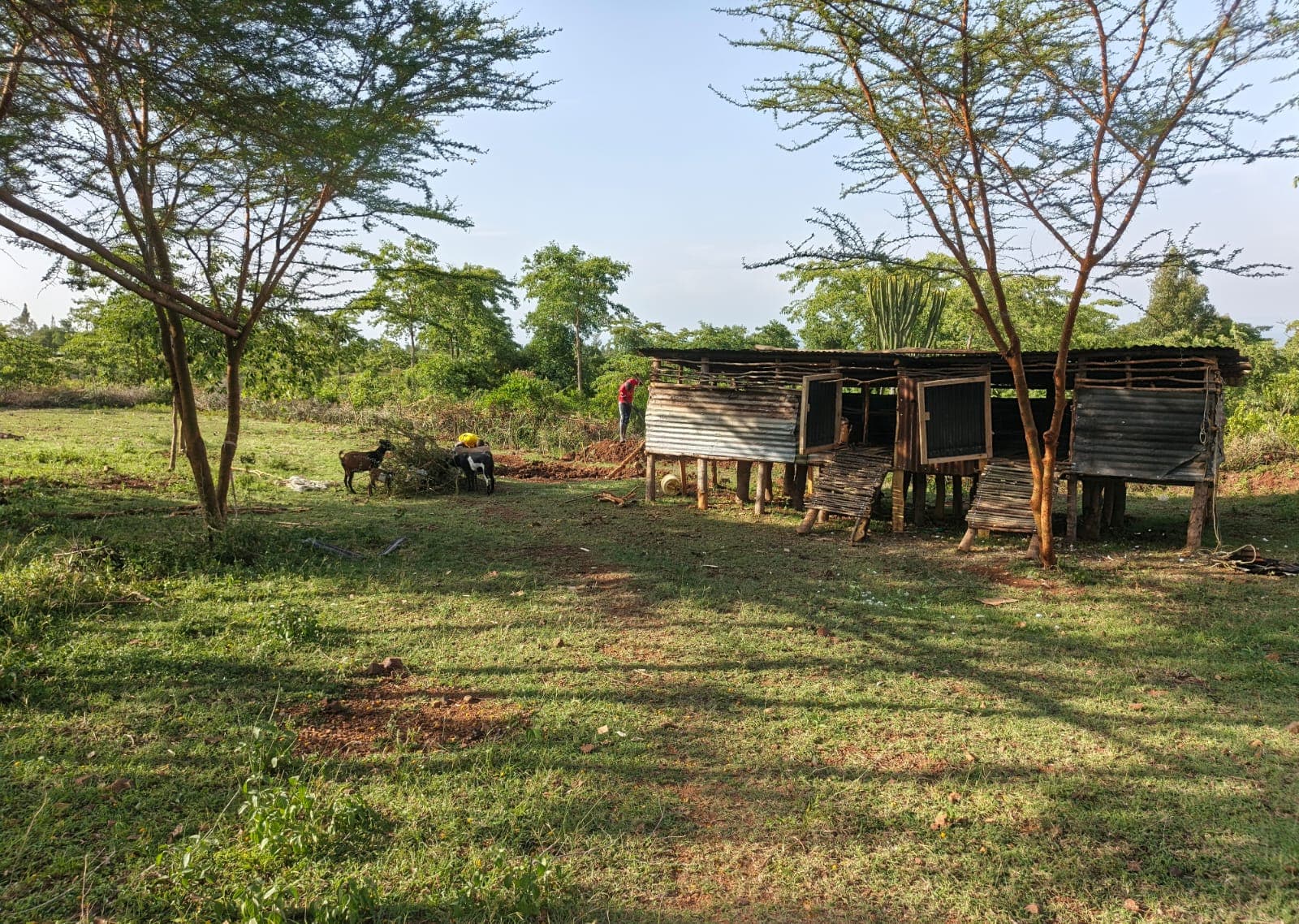
Who visits
Farmers, young people, students and groups
The farm is more useful to some visitors than others, and we would rather shape the visit around why you are coming.
Farmers and livestock keepers
Look at the housing, the breeding herd and the feeding, and ask what you would actually ask a neighbour. Most visitors come away with one or two things they can change on their own farm.
Young people
See what livestock looks like run as a business rather than as savings — the animals, the systems behind them, and the work it takes to keep both going.
Schools, colleges and farmer groups
A working farm rather than a demonstration plot. Groups are welcome, and we will shape the walk around what you are studying or trying to solve.
Organisations and partners
If you work on livestock, climate resilience or rural enterprise in Homa Bay, the farm and its records are open to you.
What you will see
Five stops on the walk
This is a working farm, so what is actually happening on the day shapes the visit — a feeding round, a health check, a weighing, or construction work at the pan.
- 01
The goat house
A 22 × 12 ft raised house on timber stilts. You can see why the slatted floor matters for hoof health, and how it makes manure collectible.
- 02
The breeding herd
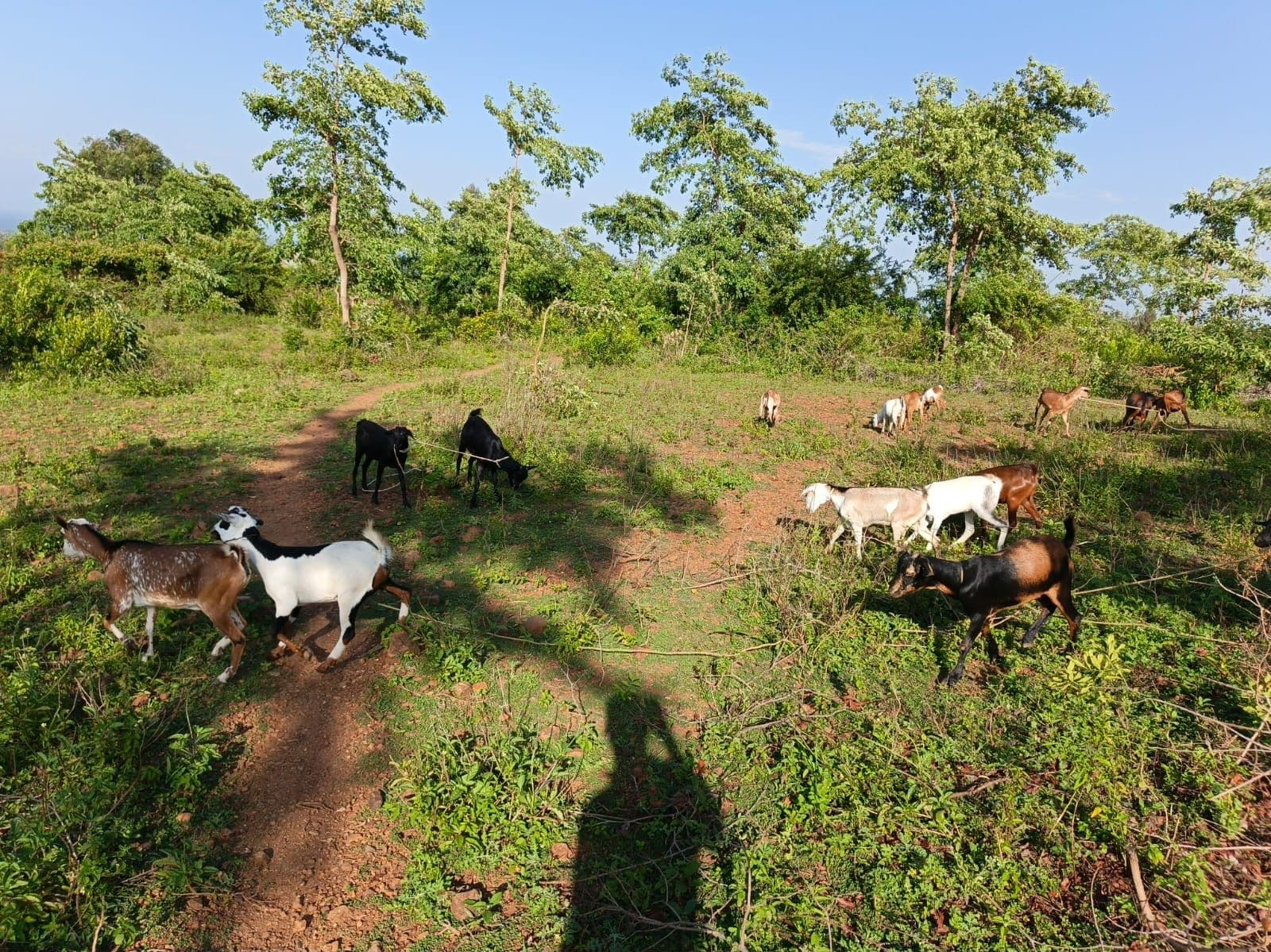
Locally adapted does, Galla and Galla-cross sires, and the ear tags that connect each animal to its weight, health and lineage history.
- 03
The browse line
Where the herd feeds, and how browse is rested rather than stripped. This is also where condition problems show up first.
- 04
The water pan
Excavation began by hand in 2026. It is the priority build on the farm and the clearest example of what water storage changes here.
- 05
The records
The herd register and the individual animal records. Ask to see them — that is what they are for.
Practical
Arranging a visit
Everything you need to know before you set out.
| Detail | |
|---|---|
| Cost | Free of charge |
| Booking | Get in touch first, by WhatsApp, phone, email or the contact form |
| Notice | A day or two for one or two people; a week for a group |
| How long | About an hour for a walk round; longer for a group or a training session |
| Best time | Early morning or late afternoon, when the herd is being moved and checked |
| Where | Rachuonyo North Sub-County, Homa Bay County, Kenya |
| What to wear | Closed shoes you do not mind getting dusty |
The farm is roughly ten kilometres from the nearest reliable water source, and dry seasons here are long. That makes it a genuinely useful place to see climate-smart livestock farming in practice rather than hear about it in a classroom.
Message us and we will send directions and agree a day and a time that works for both sides.
Groups and training
Bringing a class or a farmer group
Tell us the size of the group, roughly how old they are, and what you want them to take away. We will build the walk around that.