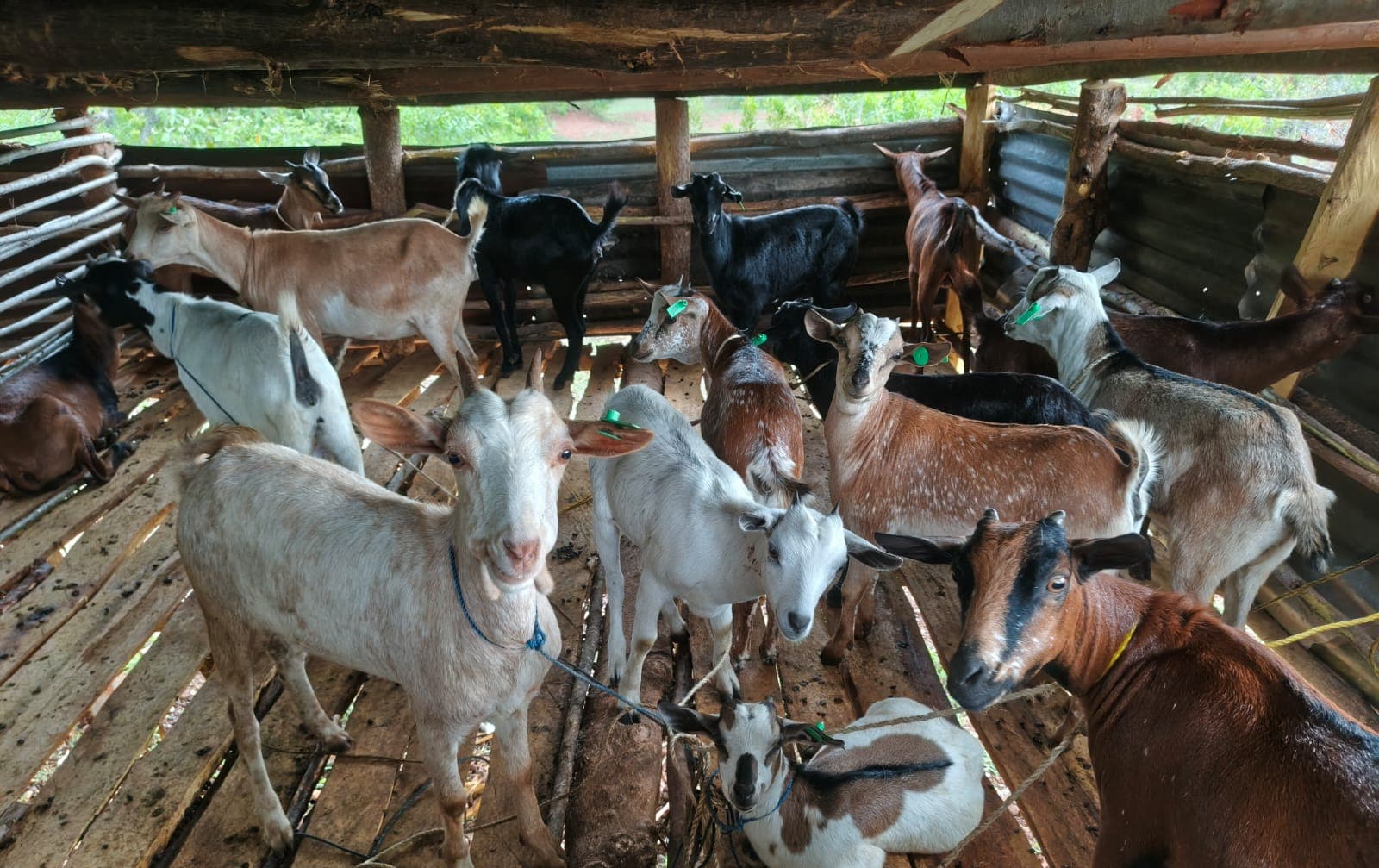
Walk into the goat house and the green ear tags are one of the first things you see. Each number connects an animal to a written record: weight, health events, lineage, and breeding information where it applies.
The record is useful long before an animal is sold. Weight changes can point to growth or health concerns. Treatment and vaccination entries help the team follow routine care. Parentage helps plan matings and compare offspring from different sires.
At sale, the same information helps a buyer understand what is known about the animal. A current weight can be checked. Health entries can be reviewed. For breeding stock, the available sire, dam, and performance history can be discussed before a price is agreed.
Not every animal has the same depth of history. A goat born on the farm may have records from birth, while an animal bought into the herd begins with the information available at arrival. GirSiko keeps those boundaries visible rather than filling gaps with estimates.
The system is deliberately simple: an ear tag, a working record, and the discipline to update it when something changes. Its value is consistency across the herd.